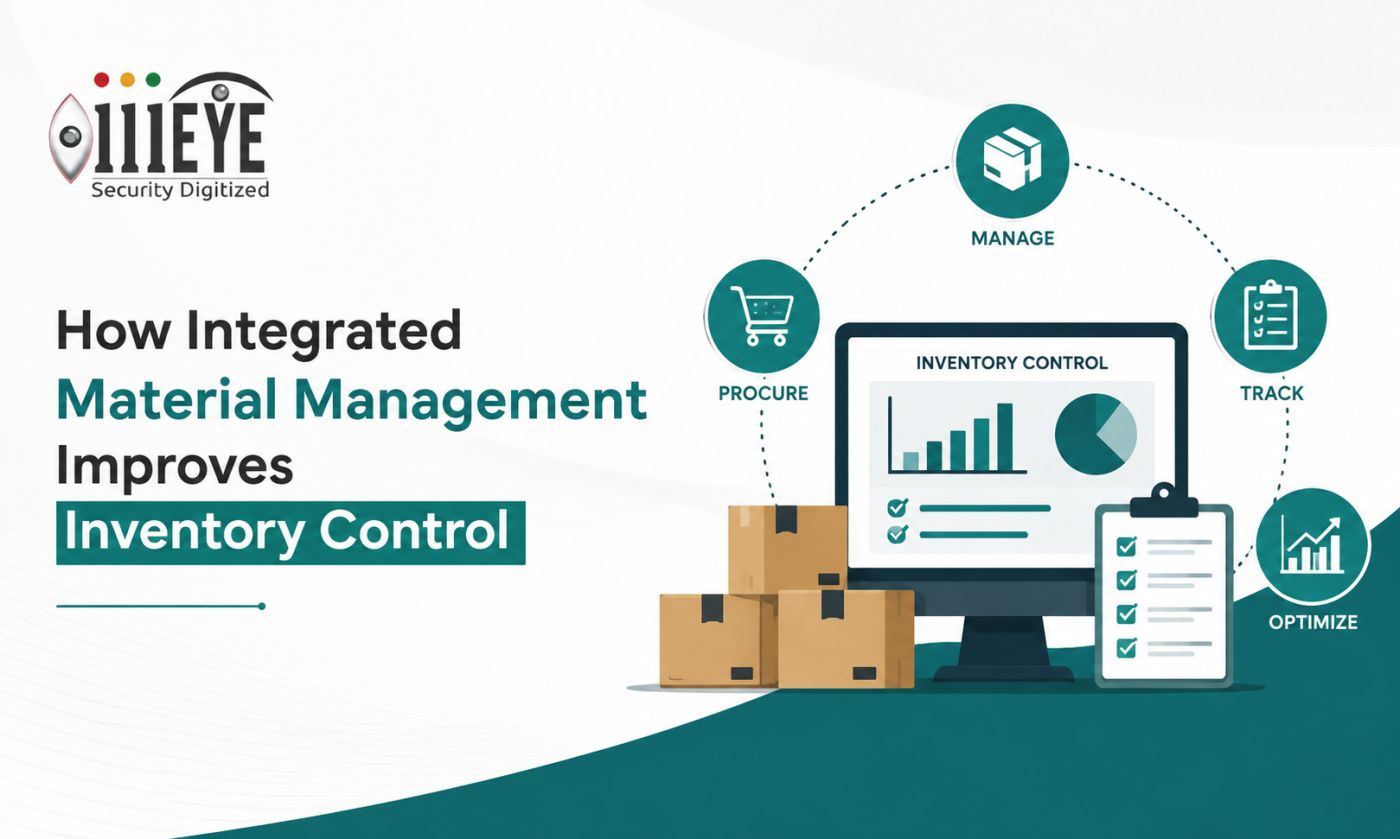
How Integrated Material Management Improves Inventory Control
Effective inventory control is one of the most important factors in maintaining a productive and profitable business. Whether you're managing a manufacturing facility, warehouse, construction site, healthcare organization, or retail operation, having the right materials available at the right time directly impacts operational efficiency and customer satisfaction.
Traditional inventory methods often rely on spreadsheets, manual record-keeping, or disconnected software, making it difficult to maintain accurate stock levels. An integrated material management system addresses these challenges by connecting procurement, inventory, warehouse operations, and reporting into a single platform. This integrated approach enables organizations to monitor inventory in real time, reduce waste, and make better business decisions.
At iiieye, businesses can leverage intelligent digital solutions that simplify material tracking, automate inventory processes, and improve operational visibility across departments.
What is an Integrated Material Management System?
An integrated material management system is a centralized solution designed to manage the complete lifecycle of materials—from purchasing and receiving to storage, usage, transfer, and replenishment. Instead of operating multiple standalone applications, organizations can manage every stage of inventory through a unified dashboard.
A modern material management system provides real-time visibility into inventory movement while helping procurement, warehouse, finance, and operations teams work together more efficiently.
The result is better inventory accuracy, faster decision-making, and improved resource utilization.
Also, Read more here - Best Material Management Software in India | Top 10 (2026)
Why Inventory Control Matters
Inventory is one of the largest operational investments for many businesses. Poor inventory management can lead to several challenges, including:
1. Overstocking that increases storage costs
2. Stock shortages that delay production
3. Manual data entry errors
4. Duplicate purchasing
5. Material wastage
6. Poor demand forecasting
7. Limited visibility across warehouses
Without accurate inventory information, businesses may experience production delays, higher operational expenses, and dissatisfied customers.
An integrated system minimizes these risks by providing accurate, real-time inventory information across every department.
How an Integrated Material Management System Improves Inventory Control
1. Real-Time Inventory Visibility
One of the biggest advantages of an integrated solution is real-time inventory monitoring.
Every stock movement—including receiving, issuing, transferring, and returning materials—is automatically updated in the system. Employees no longer need to rely on outdated spreadsheets or manual stock counts.
With instant visibility, managers can:
1. Monitor available inventory
2. Identify low-stock items
3. Track material movement
4. Reduce inventory discrepancies
5. Improve stock accuracy
This transparency enables faster and more informed decision-making.
2. Automated Stock Replenishment
Maintaining the right inventory level is essential for uninterrupted business operations.
A material management system can automatically monitor inventory thresholds and notify procurement teams when stock reaches predefined reorder levels. Some solutions can even automate purchase requests based on demand patterns.
This helps organizations:
1. Prevent stockouts
2. Avoid emergency purchases
3. Reduce excess inventory
4. Maintain optimal stock levels
Automation reduces manual effort while improving purchasing efficiency.
3. Better Procurement Coordination
Inventory control extends beyond warehouse operations—it also depends on efficient procurement.
An integrated material management system connects purchasing with inventory data, enabling procurement teams to make informed buying decisions.
Benefits include:
1. Smarter purchase planning
2. Reduced duplicate orders
3. Better supplier coordination
4. Improved purchase tracking
5. Faster approval workflows
Since inventory data is always up to date, purchasing decisions become more accurate and cost-effective.
4. Improved Warehouse Operations
Warehouse efficiency plays a major role in inventory accuracy.
Modern systems support organized storage by recording the exact location of every material, making it easier for warehouse staff to locate, issue, and replenish stock.
Additional capabilities may include:
1. Barcode scanning
2. QR code tracking
3. Bin management
4. Batch and lot tracking
5. Material movement history
These features reduce search time while minimizing human errors during warehouse operations.
5. Accurate Demand Forecasting
Historical inventory data provides valuable insights into material consumption patterns.
Businesses can analyze:
1. Seasonal demand
2. Fast-moving inventory
3. Slow-moving materials
4. Consumption trends
5. Purchase frequency
With these insights, organizations can forecast future demand more accurately, helping them purchase only what is needed.
Better forecasting also reduces excess inventory and carrying costs.
6. Reduced Material Waste
Unused, expired, damaged, or duplicate inventory directly impacts profitability.
An integrated solution tracks inventory throughout its lifecycle, making it easier to identify:
1. Obsolete materials
2. Slow-moving stock
3. Expiring inventory
4. Excess purchases
Managers can take corrective action before materials become unusable, significantly reducing operational waste.
7. Increased Inventory Accuracy
Manual inventory processes are prone to human error.
Data entry mistakes, delayed updates, and misplaced records often create discrepancies between physical inventory and system records.
Automation significantly improves inventory accuracy through:
1. Real-time updates
2. Digital transactions
3. Automated validations
4. Centralized records
5. Reduced manual intervention
Accurate inventory data enables businesses to make confident operational and financial decisions.
8. Enhanced Reporting and Analytics
Business leaders require reliable information to optimize inventory performance.
An integrated solution provides detailed reports on:
1. Stock availability
2. Material consumption
3. Purchase history
4. Supplier performance
5. Inventory valuation
6. Warehouse utilization
7. Reorder trends
Interactive dashboards help decision-makers identify inefficiencies and continuously improve inventory management processes.
Key Features of the Best Material Management System
When selecting the best material management system, businesses should look for features that support growth, automation, and operational efficiency.
Essential features include:
1. Real-time inventory tracking
2. Procurement management
3. Purchase order management
4. Warehouse management
5. Barcode and QR code integration
6. Batch and serial number tracking
7. Automated stock alerts
8. Multi-location inventory management
9. Supplier management
10. Role-based user access
11. Approval workflows
12. Mobile accessibility
13. Dashboard and analytics
14. Audit trails
15. Cloud deployment options
These capabilities help organizations improve inventory accuracy while streamlining daily operations.
Industries that Benefit from Integrated Material Management
Inventory control is essential across many industries.
Organizations that benefit include:
1. Manufacturing
2. Construction
3. Healthcare
4. Pharmaceuticals
5. Retail
6. Logistics
7. Warehousing
8. Automotive
9. Food and beverage
10. Educational institutions
11. Government organizations
Each industry relies on accurate material tracking to reduce costs, improve productivity, and maintain operational continuity.
Why Businesses Choose iiieye
Businesses looking to modernize inventory operations need technology that is scalable, reliable, and easy to use.
iiieye provides intelligent digital solutions that help organizations simplify material tracking, automate procurement workflows, and improve inventory visibility through a centralized platform.
By implementing an advanced integrated material management system, organizations can:
1. Improve inventory accuracy
2. Reduce manual processes
3. Optimize warehouse operations
4. Enhance procurement efficiency
5. Minimize material waste
6. Increase operational transparency
7. Support data-driven decision-making
These improvements contribute to higher productivity and better resource management across the enterprise.
Best Practices for Better Inventory Control
To maximize the benefits of an integrated solution, organizations should:
1. Maintain accurate master data.
2. Conduct regular inventory audits.
3. Set appropriate reorder levels.
4. Use barcode or QR code scanning.
5. Train employees on standardized inventory processes.
6. Monitor inventory reports regularly.
7. Integrate procurement with warehouse operations.
8. Review supplier performance periodically.
Following these practices helps businesses sustain accurate inventory records and improve overall efficiency.
Conclusion
Inventory control is no longer limited to counting stock—it is about creating a connected, data-driven process that supports smarter business decisions. An integrated material management system brings procurement, inventory, warehouse management, and reporting together, enabling organizations to maintain accurate stock levels, reduce waste, and improve operational efficiency.
Choosing the right material management system allows businesses to streamline workflows, increase visibility, and respond quickly to changing operational demands. For organizations seeking the best material management system, adopting a modern, integrated platform is a strategic investment that enhances productivity and long-term growth.
With innovative solutions from iiieye, businesses can transform inventory management into a streamlined, efficient, and intelligent process that supports sustainable operational success.