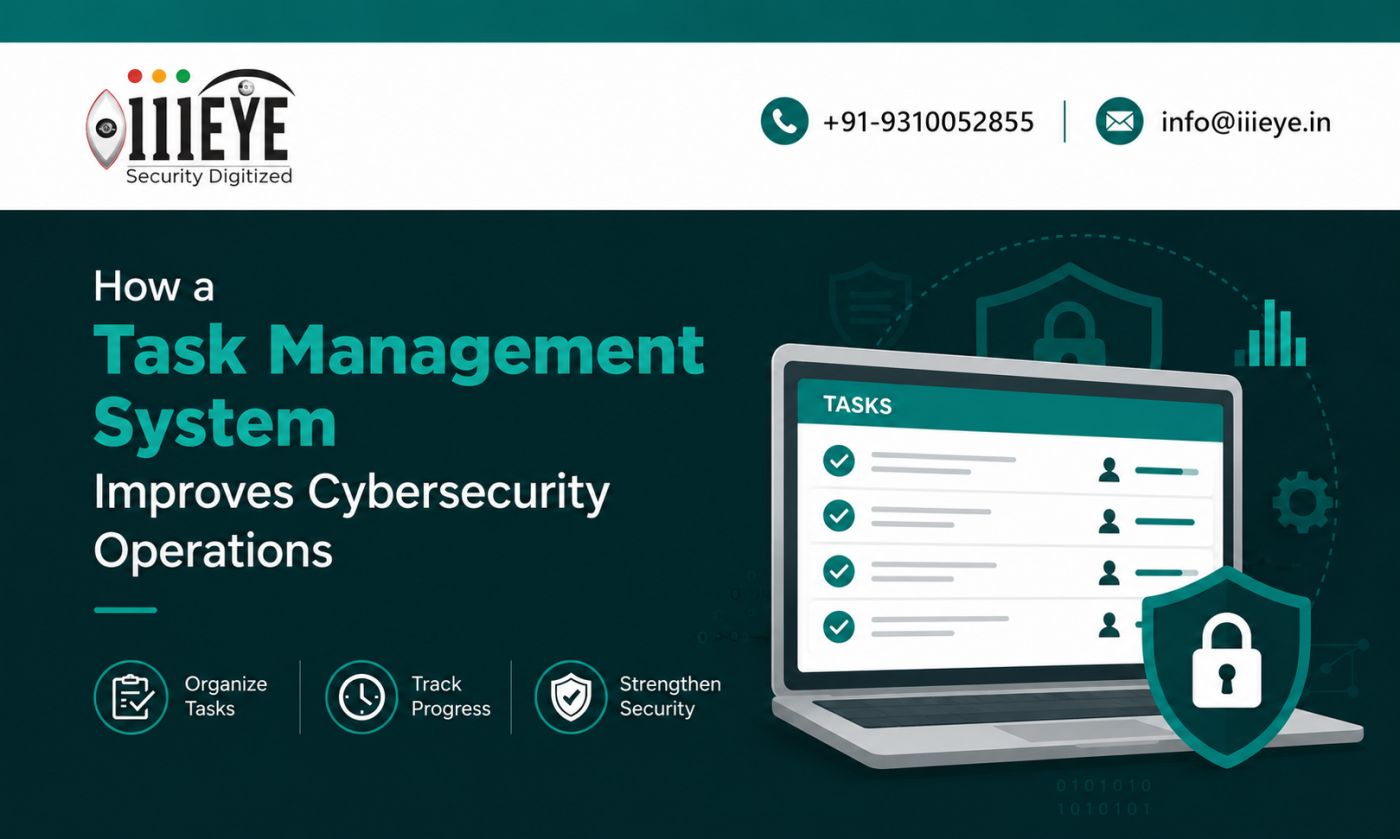
How a Task Management System Improves Cybersecurity Operations
Cybersecurity companies operate in a fast-paced environment where every task matters. From monitoring network threats and responding to incidents to conducting compliance audits and managing security updates, teams must coordinate efficiently to protect business data. Relying on spreadsheets, emails, or manual tracking often results in missed deadlines, delayed responses, and communication gaps.
An advanced task management system helps cybersecurity organizations organize work, improve visibility, and ensure that critical security tasks are completed on time. With a centralized platform, security teams can streamline operations, assign responsibilities, and monitor progress in real time.
Also, Read more here - What is Task Management Software? Complete Guide | IIIEYE
Why Cybersecurity Teams Need a Task Management System
Cybersecurity operations involve multiple teams handling vulnerability assessments, incident response, penetration testing, software updates, and compliance activities. Without a structured workflow, important tasks can easily be overlooked.
A modern task management system enables organizations to:
1. Assign tasks to the right team members.
2. Track task progress in real time.
3. Prioritize critical security activities.
4. Improve collaboration between security, IT, and management teams.
5. Reduce operational delays and human errors.
As cyber threats continue to evolve, having a centralized platform becomes essential for maintaining strong security operations.
Key Ways a Task Management System Improves Cybersecurity Operations
1. Faster Incident Response
Cybersecurity incidents require immediate action. Whether it's a malware attack, phishing attempt, or unauthorized access, every minute counts.
A centralized task management platform allows incident managers to assign responsibilities instantly, monitor progress, and ensure every response step is completed according to the organization's security process.
2. Better Task Prioritization
Not every cybersecurity task has the same level of urgency. Critical vulnerabilities should always receive immediate attention.
A structured system helps security teams categorize tasks based on severity, deadlines, and business impact, ensuring that high-risk issues are addressed first.
3. Improved Team Collaboration
Cybersecurity projects often involve multiple departments, including IT, compliance, management, and external vendors.
A centralized platform enables everyone to:
1. Share updates.
2. Upload supporting documents.
3. Track ongoing activities.
4. Maintain complete communication history.
This reduces misunderstandings and keeps everyone aligned.
4. Enhanced Visibility Across Security Operations
Managers need complete visibility into ongoing work to make informed decisions.
A reliable employee task management system provides dashboards showing:
1. Pending tasks
2. Completed activities
3. Overdue assignments
4. Team workload
5. Project status
This transparency helps improve planning and operational efficiency.
5. Simplified Compliance Management
Cybersecurity companies must comply with industry regulations and internal security policies. Missing audit-related activities can lead to compliance risks.
A task management solution ensures recurring compliance activities, documentation reviews, policy updates, and audit preparations are scheduled, tracked, and completed on time.
6. Reduced Human Errors
Manual task tracking often leads to forgotten assignments and missed deadlines.
Automated notifications, reminders, and status updates help team members stay informed while minimizing the chances of overlooking critical security activities.
7. Better Resource Allocation
Managers can easily identify overloaded or underutilized team members.
This enables balanced workload distribution, improves productivity, and ensures that cybersecurity professionals focus on high-priority tasks without unnecessary bottlenecks.
Also, Read more here - Best Material Management Software in India | Top 10 (2026)
Essential Features to Look For
When selecting a task management solution for cybersecurity operations, consider features such as:
1. Task assignment and ownership
2. Priority-based workflows
3. Real-time status tracking
4. Automated reminders
5. Document attachment support
6. Activity logs
7. Dashboard and reporting
8. Role-based access control
9. Mobile accessibility
10. Integration with existing business systems
These capabilities help organizations manage security workflows more effectively while maintaining accountability.
How iiieye Supports Smarter Cybersecurity Operations
Solutions like iiieye provide organizations with a centralized platform to manage operational tasks efficiently. By streamlining task allocation, monitoring progress, and improving collaboration across teams, iiieye helps businesses strengthen workflow management and maintain better operational control.
Whether managing routine security activities or responding to critical incidents, a digital task management solution enables teams to work more efficiently while improving accountability across the organization.
Conclusion
Cybersecurity operations demand speed, accuracy, and continuous coordination. Manual processes are no longer sufficient for managing today's complex security environment.
Implementing a modern task management system helps organizations improve incident response, enhance collaboration, reduce operational risks, and maintain better visibility into ongoing work. An efficient employee task management system empowers security teams to stay organized, complete critical tasks on time, and build stronger cybersecurity operations for the future.