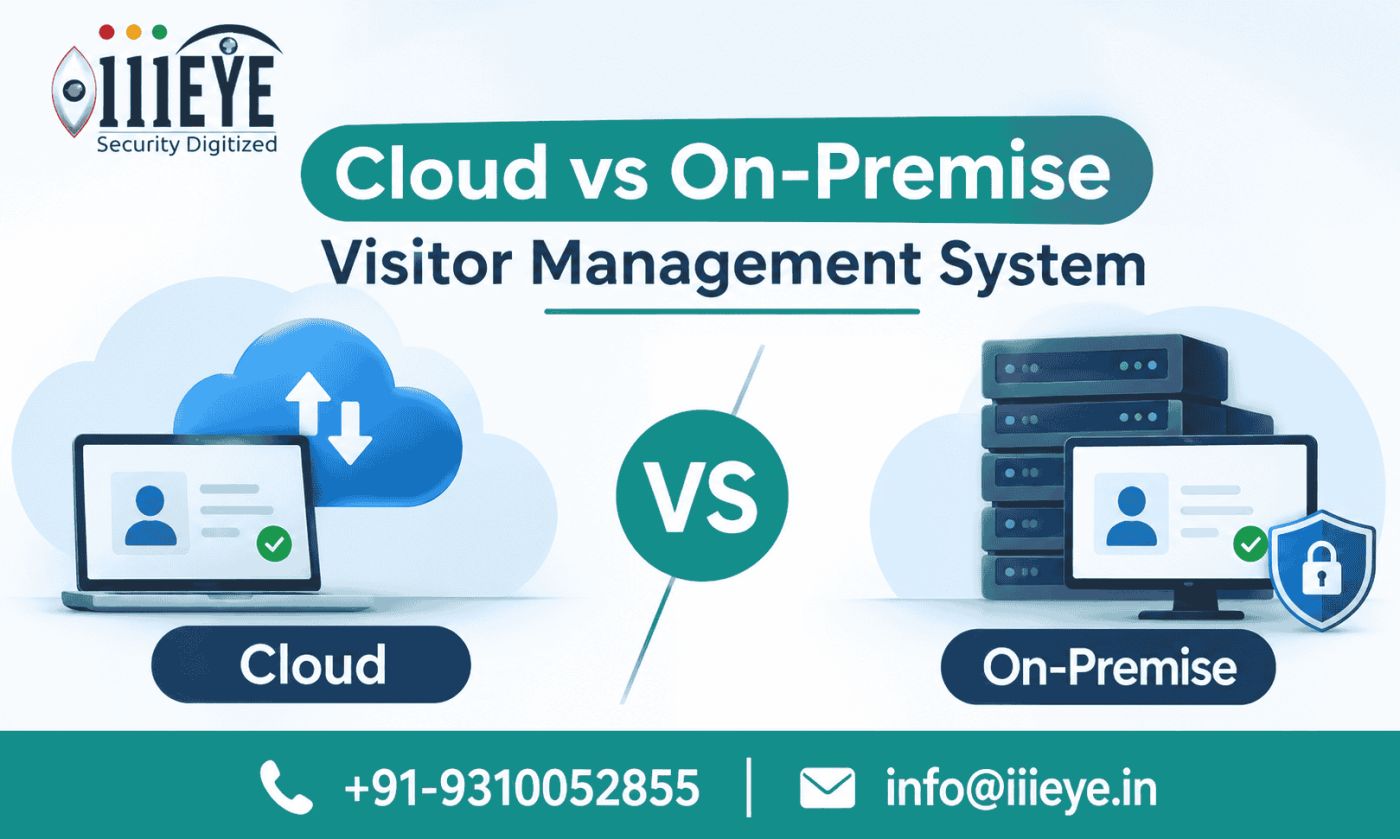
Cloud vs On-Premise Visitor Management System
Managing visitors is an important responsibility for offices, hospitals, factories, educational institutions, and corporate buildings. Maintaining visitor records manually can create security gaps, paperwork, and unnecessary delays at reception. A digital Visitor Management System helps organisations register visitors, maintain entry records, and improve the overall check-in experience.
However, businesses often face one important question: Should they choose a cloud-based or an on-premise visitor management solution?
Both options offer useful features, but their infrastructure, accessibility, maintenance, and costs are different. Understanding these differences can help organisations select the right solution for their requirements.
What is a Cloud-Based Visitor Management System?
A cloud-based Visitor Management System stores information on remote servers and allows authorised users to access the software through an internet connection. Organisations do not need to maintain their own server infrastructure to operate the system.
With cloud-based Visitor Management Software in India, businesses can manage visitor registrations, send host notifications, monitor visitor entries, and access records from different locations, depending on their access permissions.
Key benefits of cloud-based software:
- Easy accessibility: Authorised employees can access visitor information from different locations.
- Lower infrastructure costs: Businesses generally do not need to purchase and maintain dedicated servers.
- Automatic updates: Software updates and improvements can be managed by the service provider.
- Scalability: Organisations can expand their usage as their visitor management requirements grow.
- Centralised records: Visitor information can be maintained in one digital system.
Cloud solutions are particularly useful for businesses operating across multiple branches or locations.
What is an On-Premise Visitor Management System?
An on-premise Visitor Management System is installed on an organisation's own servers and managed within its IT infrastructure. The company is responsible for maintaining the hardware, software environment, backups, and security arrangements.
This model can be suitable for organisations that prefer to manage their technology infrastructure internally or have specific data hosting requirements.
Key benefits of on-premise software:
Greater infrastructure control: Organisations manage their own servers and software environment.
Internal data management: Visitor records can be stored within the organisation's infrastructure.
Customisation: Businesses may configure the system according to their internal IT policies.
Reduced dependency on external hosting: The organisation controls its hosting environment, although local network and system availability still matter.
However, businesses must consider server maintenance, backup arrangements, software upgrades, and technical support before choosing this option.
Cloud vs On-Premise Visitor Management System: Key Differences
| Comparison Factor | Cloud-Based System | On-Premise System |
|---|---|---|
| Hosting | Remote servers | Organisation's servers |
| Initial investment | Usually lower | Usually higher |
| Maintenance | Managed largely by the provider | Managed by internal IT teams |
| Accessibility | Internet-based access | Depends on internal network configuration |
| Updates | Often automatic | Usually managed internally |
| Scalability | Generally easier | May require additional infrastructure |
| Data control | Depends on provider policies and configuration | Greater direct infrastructure control |
The right choice depends on an organisation's budget, IT capabilities, security policies, and operational requirements.
Which Visitor Management Software is Better for Hospitals?
Hospitals handle visitors, patients, attendants, medical representatives, and service personnel throughout the day. Managing these entries manually can make reception operations more complicated.
A reliable visitor management software for hospitals can help streamline visitor registration, maintain digital entry records, support host notifications, and improve visibility into who enters the premises.
For hospitals with multiple departments or branches, cloud-based solutions can offer convenient access to visitor information. However, healthcare organisations should carefully evaluate data protection, access permissions, hosting arrangements, and applicable privacy requirements before selecting a platform.
On-premise solutions may be appropriate for hospitals that require direct control over their IT infrastructure and have dedicated technical teams.
Factors to Consider Before Choosing a Visitor Management System
Before investing in any visitor management solution, organisations should evaluate the following points:
1. Security requirements: Check how visitor information is protected and who can access it.
2. Budget: Compare initial setup expenses with ongoing subscription, maintenance, and infrastructure costs.
3. Business size: Consider the number of visitors, reception points, and operating locations.
4. Integration: Check whether the software supports existing access control, gate pass, or notification systems.
5. Technical support: Evaluate the provider's customer support, training, and upgrade policies.
6. Scalability: Choose a system that can support future business expansion.
These factors can help businesses identify the top visitor management software for their operational needs rather than choosing a product based only on price.
Why Choose IIIEYE for Visitor Management?
IIIEYE offers cloud-based workplace and management solutions designed to simplify organisational operations. Its Visitor Management System helps businesses move away from traditional paper-based visitor registers towards a more organised digital process.
Features such as visitor registration, entry tracking, host notifications, OTP verification, photo capture, and digital record management can support a smoother visitor experience while helping organisations maintain better visibility over workplace entries.
As a software development company in India, IIIEYE focuses on providing digital solutions that help businesses manage everyday workplace activities more efficiently.
Organisations can explore IIIEYE's Visitor Management System to understand how digital visitor handling can support their security and administrative processes.
Frequently Asked Questions (FAQs)
1. What is the main difference between cloud and on-premise visitor management software?
Ans. Cloud software operates through remotely hosted infrastructure, whereas on-premise software runs on an organisation's own servers.
2. Is cloud-based visitor management software secure?
Ans. It can be secure when the provider follows appropriate security practices, including encryption, access controls, regular backups, and secure hosting arrangements.
3. Can hospitals use cloud-based visitor management systems?
Ans. Yes. Hospitals can use cloud-based systems to organise visitor registration and entry records, subject to their privacy, security, and compliance requirements.
4. Which visitor management system is more cost-effective?
Ans. Cloud-based solutions generally require less upfront infrastructure investment, while on-premise solutions may involve higher initial setup and maintenance costs. The total cost depends on the organisation's requirements.
Final Thoughts
Both cloud-based and on-premise Visitor Management Systems can improve visitor handling and workplace security. Cloud solutions are often suitable for businesses looking for flexibility, easier scalability, and lower infrastructure responsibilities. On-premise systems can be a better fit for organisations that want direct control over their hosting environment.
Before making a decision, evaluate your security needs, budget, IT resources, and future growth plans. Choosing the right solution can help create a more organised, secure, and efficient visitor management process.
About the Author

Preeti Sharma
Digital Marketing & Content SpecialistPreeti Sharma is a digital marketing and content professional focused on SEO, AEO, GEO, SaaS, workplace technology and software solutions. She creates research-based content designed to make complex technology topics easier to understand for businesses and decision-makers.